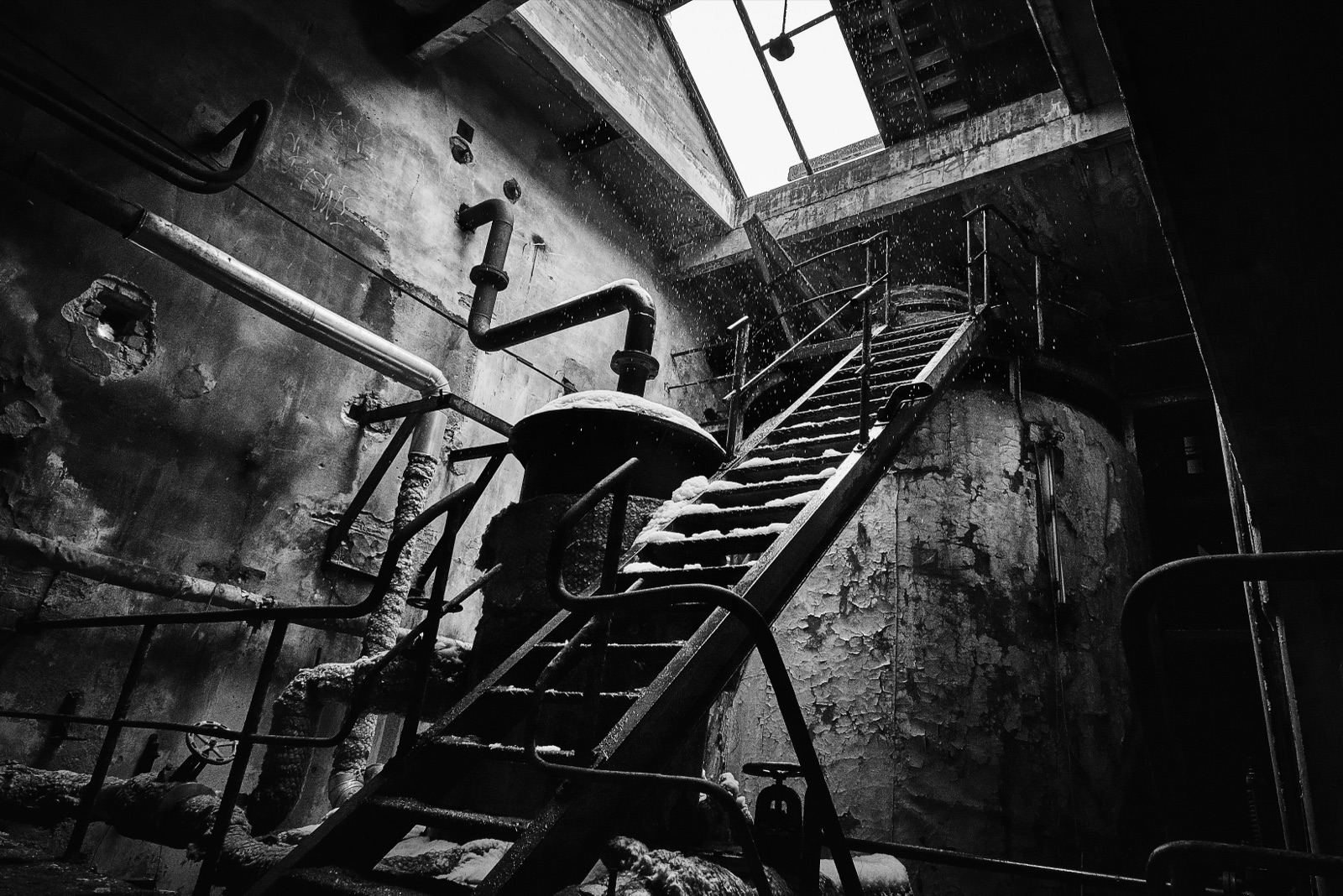
A world without colour
Once there is less light, everything becomes monochrome to the human eye. The streets, the faces, the sky — everything exists in tones of grey, in the quiet space between black and white. In a way, it turns the world into the truest form of what we see.
When red and blue and green fall away, what remains is structure. Light. Shadow. The shape of a face. The weight of silence in an empty street. I think we are so used to colour that we have stopped seeing it. It washes over us, a constant stream of stimulation, pulling our attention in every direction at once. A world without colour offers something rare — permission to slow down.
A portrait in monochrome asks different questions. Not what colour are her eyes but where is the light falling. Not what is he wearing but what is he carrying. The surface falls away, and something underneath begins to breathe.
The same is true for cities at night. Strip away colour and a rain-soaked street becomes a study in reflection. A lit window becomes a story. A figure walking alone beneath a streetlamp becomes everyone who has ever walked alone beneath a streetlamp.
There is a calmness to black and white that I keep returning to. It is not nostalgic — I have no interest in pretending we live in another time. It is simply that monochrome creates a space for attention. It asks the viewer to meet the image halfway, to bring something of their own to what they see. The absence of colour becomes an invitation.
Monochrome photography is not about removing something. It is about revealing what was always there, hidden beneath the noise of colour. A world without colour is not a world with less. It is a world distilled.